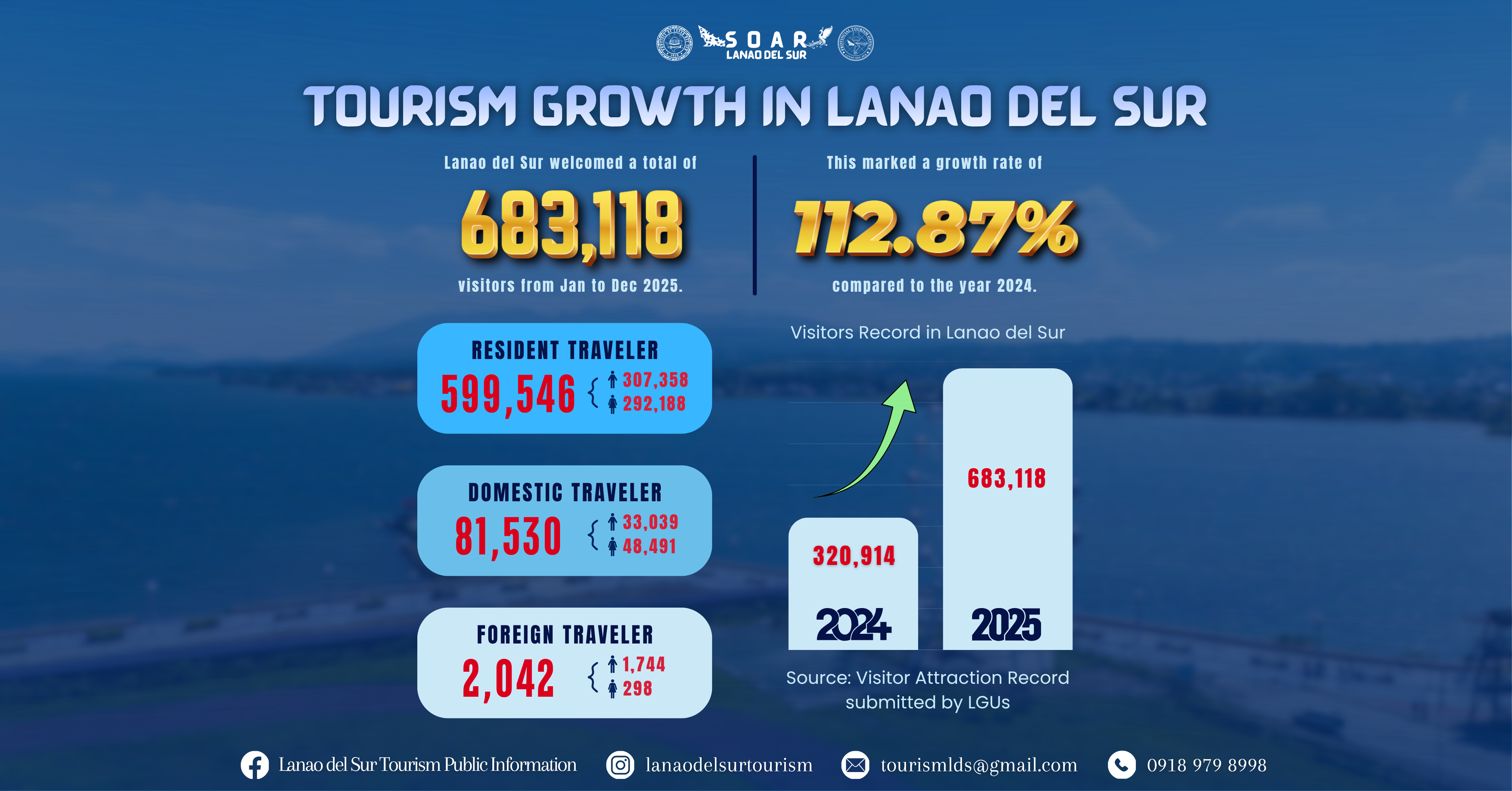
Behind 112.87% are mothers selling pater at the trailhead. Lanao del Sur welcomed 683,118 visitors in 2025 — told through the people who met them.
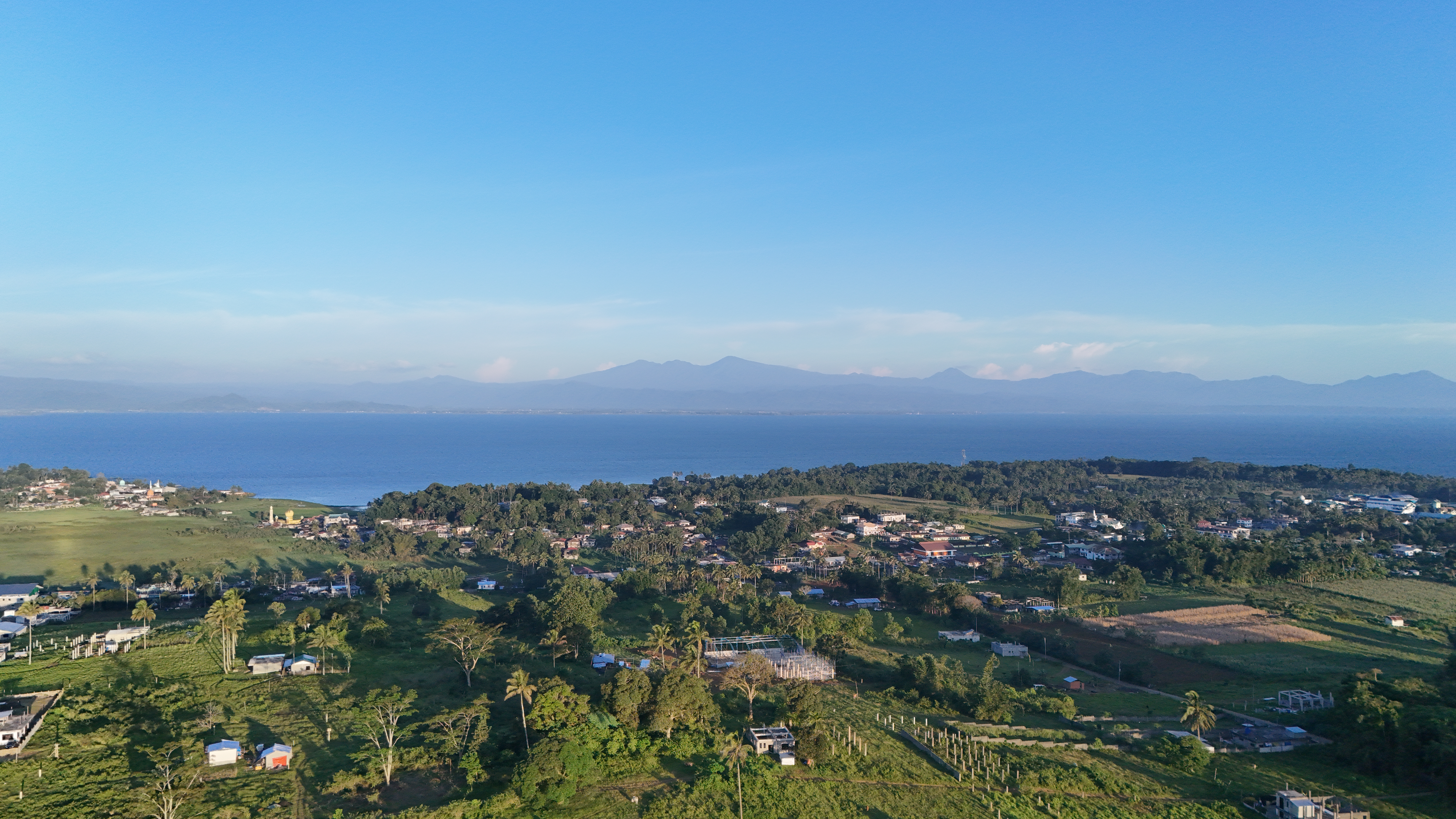
If you have ever stood at the edge of Lake Lanao just before sunrise, you know the moment I am talking about. The mist sits low on the water, thick enough to hide the far shore. Then the light comes over the hills and the mist lifts, and the lake is simply there, the way it has been for ten million years.
I thought about that image all of last year.
What I saw in the numbers
When the 2025 visitor record came in, I did not see a bar chart. I saw faces.
Our province welcomed 683,118 visitors between January and December 2025. The year before, the count was 320,914. That is a growth rate of 112.87 percent. We more than doubled.
But what flashed before me were the mothers in Butig, setting out warm native delicacies along the roadside near Mineral Falls. The weathered hands of our master woodcarvers and weavers in Tugaya, who no longer have to wonder whether anyone will appreciate or buy what they make.
For years we carried the weight of other people’s misconceptions about our home. So when that number more than doubled, what I felt was not administrative pride. It was relief.
Every percentage point in that surge is a tricycle driver bringing home a little more. A resort worker in Wao earning a steady wage. A young Meranaw realizing there is a future here, on our own ancestral soil, without having to leave it.
Butig said its own name out loud

Of all our towns, Butig received the most visitors last year: 197,205. Nearly three of every ten people who came to Lanao del Sur went to Butig.
I want you to understand what that means. For a long time, the mere mention of that name stirred hesitation in outsiders. Sitie Amina Ronda, the Municipal Tourism Officer there, put it better than I can.
“When travelers arrived in droves throughout 2025, our community went through an entire wave of emotions, but pure joy stood above all,” she told me. “For us Ibutigens, having our hometown recognized, and seeing years of hesitation and fear gradually melt away, was a monumental victory.”
Then people came for Mineral Falls, for Nature’s View, for Mt. Makaturing. And the old story quietly dissolved.
“We no longer hesitate when asked where we come from,” Sitie Amina said. “Today, we hold our heads high, proud to share that Butig is safe, welcoming, and deeply endowed.”
Here is the part I love most. At the peak of the visits to Butig Nature’s View, especially around the Miracle Water, the entrance area came alive like a night market. Small stalls lined the path. Mothers selling handcrafted souvenirs, native delicacies, and hot pater to visitors coming off the trail.
That is not a statistic. That is grocery money. That is a child’s school allowance.
And on the trails themselves, something lasting happened. Guiding in Butig used to be informal, whoever happened to be free that day. The 2025 influx became the reason to formally organize the Butig Community Tour Guides, with real training and safety standards. Our guides now earn a dignified, dependable living doing what they already loved.
The cool air of Wao

Second on our list is Wao, with 135,551 visitors. Anyone who has made that drive knows why. You climb, the air thins and cools, and the heat of the lowlands falls away behind you.
Across the province, 12,350 guests stayed overnight, and much of that happened in Wao. Villa Esguerra is one of the establishments our visitors chose most often, along with Chicpoint Inn and L&A Traveler’s Inn there, and The Ridge Hotel and MBistro in Marawi City.
Genalyn Gaviola, who runs operations at Villa Esguerra, told me what guests say when they arrive from Manila or Cebu.
“Their very first reaction is how quiet, clean, and refreshing the place feels,” she said. “They immediately notice the cool mountain climate and how genuinely welcoming our people are.”
And when they leave?
“They express deep gratitude for the care, thoughtfulness, and genuine hospitality they experienced. Over and over again, they share how remarkably kind and warm the locals truly are.”
But this is the line that matters most to me. Asked whether her team felt the surge, Genalyn said: “We felt it every single day. It kept our entire team active and busy. Most importantly, it made a tangible difference in our livelihoods, creating better and more reliable income for everyone, especially the local youth on our staff.”
Especially the local youth. Read that again. That is the whole point.
Marawi, and the sound of work
The most visited single attraction in the province last year was the Dansalan Grand Complex in Marawi City. Our other leaders were Wao Mt. Spring Resort, Lorenzo Beach in Balabagan, and Mineral Falls and Nature’s View in Butig.
Go to Tugaya on an ordinary weekday and listen. You will hear chisels. Steady tapping from under the houses where the men work the wood and the brass, while upstairs the weaving goes on until late afternoon. Okir does not come quickly. A master can spend years on a single panel.
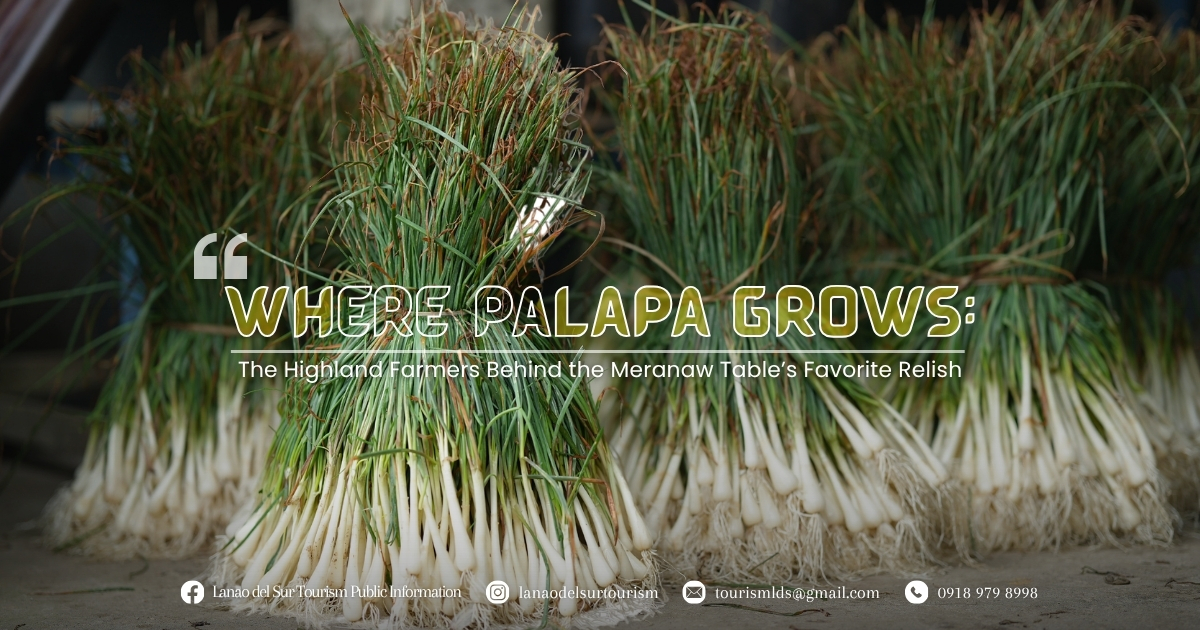
Walk through any market here and you will smell fresh palapa before you see it, that sharp bite of scallion, ginger, and chili that tells you instantly where you are.
These are not performances staged for guests. This is Tuesday. It is simply that, for the first time in a long time, there are people here to see it, and to buy.
Kapamagogopa is not a slogan

Jason Natingga guides visitors for Pamorawag, Inc. I asked him about the moment tourists finally understand where they are.
“They know about the past conflicts,” he said. “But then they see life flourishing. Lake Lanao standing timeless as one of the world’s 15 ancient lakes. Our Torogan ancestral homes still standing tall, cherished, and lived in. Our living Meranaw heritage practiced in daily community life. It bridges history with hope.”
When I asked how he lets guests feel Kapamagogopa, our tradition of freely extended help and welcome, his answer was simple. You do not explain it to them. You let it happen to them. And you seat them at a Pagana Meranaw, which remains our highest expression of honor and welcome.
Then he said something I have not stopped thinking about.
“While peace can mean different things to different people, when you are in Marawi and Lanao del Sur today, you can truly say: I am safe. No one will harm you here. Once you are welcomed into a home, whatever graces their table is freely shared with you. You break bread not as an outsider, but as family.”
The afternoon it rained on Lake Lanao
My favorite thing that happened all year was small enough that it never made any report.
A group of domestic travelers from Luzon stopped by our information center. They admitted, a little sheepishly, that before coming they had been flooded with anxious warnings from relatives who remembered old headlines.
While they were walking the shore of Lake Lanao, an afternoon drizzle started. A local family saw them, waved them under their porch, brewed hot native coffee, and brought out fresh browa. No arrangement. No payment. Nobody asked them to.
When that group came to say goodbye, one of them told me they were not taking home photos of our landscapes. They were taking home a sense of humility for ever having doubted this place.
That is when a guest stops being a tourist. They go home as an ambassador of our story.
What comes next?


I will be honest about one figure. Of our 683,118 visitors, 599,546 were residents and 81,530 were domestic travelers from other parts of the country. Only 2,042 were foreign visitors*. That is three in every thousand.
I do not read that as a failure. I read it as the work ahead.
Our own people came home first. Filipinos from other provinces followed. The world is the next chapter, and it will come the same way the others did: one honest welcome at a time, one guest telling another that the warnings were wrong.
So here is my invitation, offered the way we offer everything else here, freely and without conditions.
Come at dawn. Stand at the edge of the lake while the mist is still on the water. Wait for the light to come over the hills.
Then watch it lift.
*Source: Visitor Attraction Records submitted by LGUs, Provincial Tourism, Culture and the Arts Office, Lanao del Sur, January–December 2025.


Leave a Reply