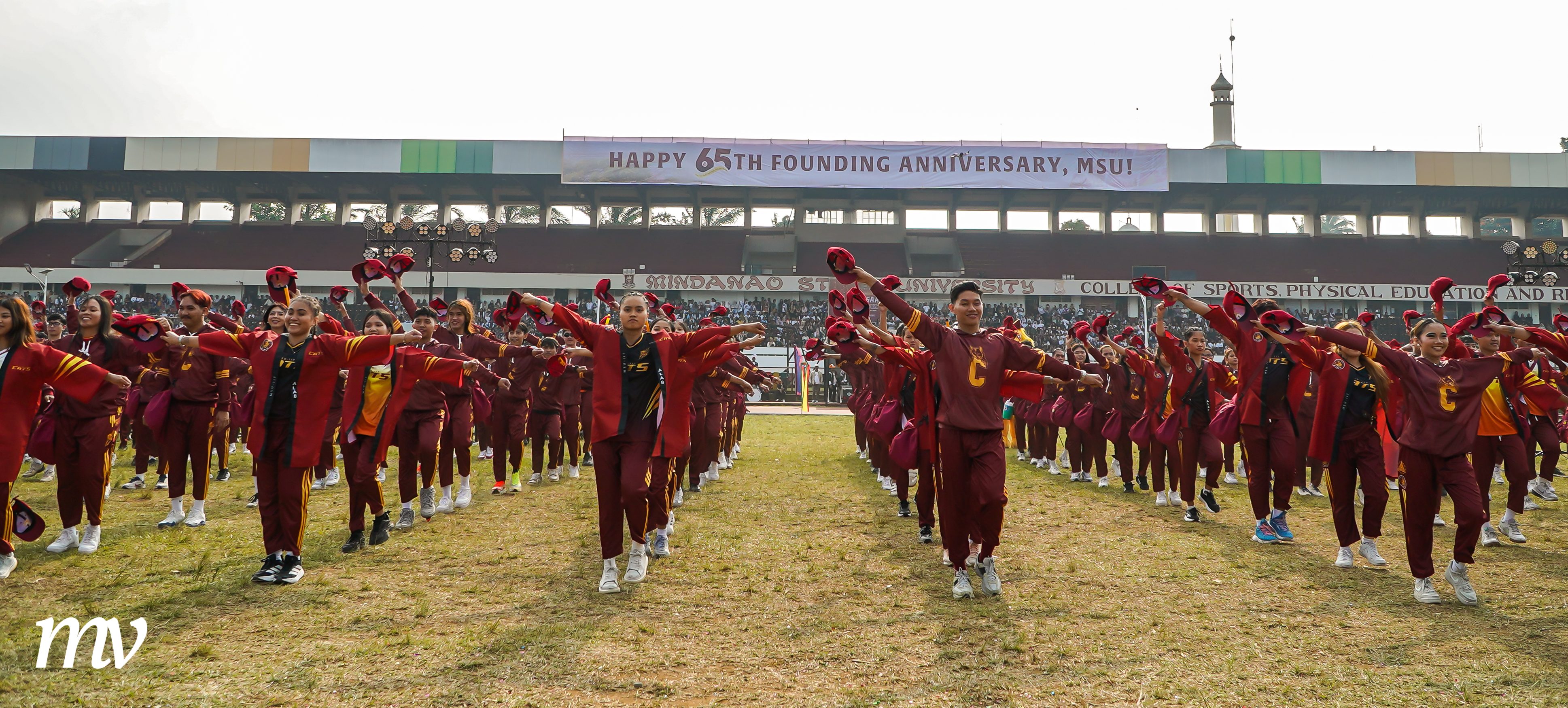
Photo Credit: Mindanao Varsitarian
If you tried getting a tricycle past six in the evening anywhere between the 00-kilometer marker and Dimaporo Gym this week, you already know what the 8th MSUSAA Unity Games look like on the ground.
The campus is packed. You have contingents from Tawi-Tawi, Sulu, Maguindanao, and Naawan walking in groups down the commercial strip, waiting outside cafeteria rows for dinner, and packing into late-night fruit and coffee stalls. Alongside the university’s 65th anniversary, this year’s games—dubbed SiKKKlab 2026—brought over 3,000 visitors to the Marawi campus in the span of just a few days.
For our team at the tourism office, an influx like this isn’t just an athletic calendar event. It is an immediate test of local sports tourism capacity, and the numbers coming out of this week tell a very clear story.
The Economic Footprint
Whenever a major institutional meet happens, people often focus on the logistics headache—traffic along the avenues, billeting bottlenecks, or venue schedules. What gets overlooked is the cash changing hands every single hour across the city.
Based on baseline monitoring from our office using standard Tourism Satellite Account (TSA) parameters, we estimate that the eight-day meet is injecting anywhere between ₱38 million and ₱46 million in total economic impact into Marawi and neighboring towns.
To be clear: that is a deliberately conservative baseline. We intentionally used floor-level spending figures rather than optimistic guesses to ensure the data holds up under scrutiny.
The breakdown comes down to three distinct groups of visitors:
First, you have roughly 1,800 student-athletes and team personnel staying a full seven days. Because the university handles their lodging in campus dorms and covers primary meals, their individual out-of-pocket spending is relatively small—around ₱450 to ₱650 a day. But multiply that across 1,800 young people buying extra snacks, paying for laundry, buying commemorative shirts, and taking tricycles back and forth between sports venues, and you are looking at nearly ₱7 million entering local tills from student allowances alone.
Then come the officials, deans, campus directors, and technical judges—about 650 individuals. This group stays five to six days, but their spending profile is entirely different. They take up commercial rooms in local inns and hotels, eat at full-service Halal restaurants, hire private vans, and buy traditional crafts before heading home. At an average of ₱2,200 to ₱3,500 daily per official, that group accounts for close to ₱11 million in direct commercial spending.
Add another 750 visiting alumni, parents, and traveling rooters spending roughly ₱1,500 to ₱2,200 a day over a long weekend, plus local contracts for sound systems, staging, and security logistics, and the direct cash entering Marawi easily hits ₱27 million to ₱28.5 million.
When you factor in local supply chains—the fact that local eateries are buying more vegetables, fish, and chicken from wet-market suppliers, and drivers are filling up at local pumps—applying a modest regional multiplier of 1.4x to 1.6x pushes the overall economic impact past the ₱40 million mark.
The Cultural Pull of Rawaten

What made this year’s games different, however, was the timing. Having the athletic meet run alongside the Rawaten Cultural Extravaganza changed the behavior of the visitors.
Usually, visiting delegations stick strictly to their courts and playing fields. But Rawaten gave people an excuse to linger. After watching the Sagayan, the Singkil, and the Tausug Pangalay staged on the campus grounds, visitors naturally wanted to see where those traditions come from.
Over the past few days, lakeside craft communities have seen a direct lift. Master brass casters in Tugaya have taken fresh orders for decorative urns and heirloom pieces from visiting campus executives, while local sellers have moved significant inventory of landap malongs and hand-embroidered langkit borders. It showed that sports brought people to Marawi, but cultural identity gave them a reason to spend.
An Intentional Strategy
None of this happens in a vacuum. Bringing all regional campuses back to the mother campus was an intentional vision spearheaded by MSU System President Atty. Paisalin P.D. Tago. His push for system-wide solidarity showed that major academic milestones can—and should—serve as tangible socio-economic lifelines for the host province.
When the closing ceremonies finish on September 8 and delegations start boarding vans and buses for the trip home, the trophies will be packed away. But the earnings left in the hands of market vendors, kitchen workers, homestay owners, and transport drivers will remain right here in Lanao del Sur. That alone makes hosting the games an unmistakable win for the province. Maligayang Kaarawan, Inklusibong Pamantasan!



Leave a Reply